Best AI video generator from text 2026 : As we navigate through 2026, the landscape of artificial intelligence-powered video generation has undergone transformations so profound that they’ve redefined what we consider possible in visual storytelling. The evolution from primitive, flickering sequences in the early 2020s to today’s cinematic-quality productions represents one of the most rapid technological advancements in human history. This comprehensive guide examines the current state of text-to-video AI systems, exploring not just which platforms lead the market, but how their underlying architectures, creative philosophies, and societal impacts have matured. We stand at an inflection point where AI video generation has moved from novelty to necessity, from experimental toy to professional tool, and understanding this ecosystem is essential for creators, businesses, and educators alike.
Section 1: The Maturation of Technology – From Novelty to Professional Tool
The Technical Leap Forward
The period between 2024 and 2026 witnessed breakthroughs that fundamentally altered what text-to-video AI could achieve. Three key developments transformed the landscape:
1. Temporal Coherence Breakthroughs: The “flicker problem” that plagued early systems—where objects would morph unpredictably between frames—has been largely solved through advanced temporal attention mechanisms. Modern systems maintain object permanence across shots lasting minutes rather than seconds, enabling genuine narrative continuity.
2. Physics-Aware Generation: Where earlier models struggled with basic physical interactions, 2026 systems incorporate sophisticated physics engines that understand gravity, momentum, fluid dynamics, and material properties. A prompt for “waves crashing against rocks” now yields convincing foam patterns, water refraction, and spray dynamics rather than unconvincing liquid simulations.
3. Emotional Intelligence Integration: The most significant leap has been in emotional conveyance. Systems now understand narrative context and can adjust character expressions, body language, and even lighting to match described emotional states. A character described as “torn between duty and desire” displays subtle micro-expressions that communicate internal conflict.
See More : AI Automation Tools for Business Operations
The Architecture Evolution
Current leading systems employ hybrid architectures that combine the strengths of multiple approaches:
Multi-Modal Foundation Models: Unlike earlier single-purpose systems, 2026’s leaders are built on foundation models trained simultaneously on text, images, video, audio, and 3D data. This cross-modal understanding enables richer interpretation of prompts and more coherent outputs.
Differentiated Specialization: The market has segmented into specialized tools rather than one-size-fits-all solutions. Some platforms excel at photorealism, others at artistic styles, others at character animation, and still others at technical or educational content. This specialization reflects the technology’s maturation.
Real-Time Refinement Capabilities: Where earlier generations required waiting minutes for results, most 2026 systems offer real-time preview and iterative refinement. Creators can watch their video generate frame-by-frame, making adjustments to prompts mid-generation—a workflow revolution that transforms the creative process.
Section 2: The Market Leaders – Platforms Defining the Standard
1. CineMind Pro: The Professional Cinematographer’s AI
Emerging from a merger between several film industry AI startups, CineMind Pro has established itself as the gold standard for narrative filmmakers. Its distinguishing features:
Director Mode: Allows creators to select from dozens of established directing styles or create custom ones. Choosing “Spielbergian wonder” versus “Fincher-esque precision” yields fundamentally different interpretations of the same script.
Actor Library: Licensed digital representations of professional actors (with their consent and compensation) that can be directed through text. This addresses earlier ethical concerns while providing professional-grade performances.
Cinematic Intelligence: The platform understands complex film terminology. Prompts like “dutch angle with shallow depth of field during tense confrontation” or “tracking shot following subject through crowded environment with motivated lighting” yield precisely what professionals expect.
Collaborative Workflow Integration: Seamlessly interfaces with traditional editing software like Adobe Premiere Pro and DaVinci Resolve, allowing AI-generated segments to be integrated into conventional production pipelines.
2. DreamCanvas Studio: The Artist’s Playground
Where CineMind targets professional filmmakers, DreamCanvas serves visual artists, designers, and experimental creators. Its philosophy prioritizes creative expression over technical precision:
Style Fusion Technology: Uniquely allows blending of multiple artistic styles within a single generation. “Caravaggio lighting with Japanese ukiyo-e composition and Art Deco backgrounds” produces coherent, stunning results rather than chaotic collisions.
Interactive Canvas Approach: Rather than purely text-based prompting, DreamCanvas offers a visual interface where users can sketch rough compositions, specify motion paths, and define color palettes that the AI then interprets and refines.
Emotional Palette System: Users define emotional arcs not just through text but through color curves, musical references, or even uploaded mood images. The system interprets these emotional guides to adjust pacing, composition, and character expression.
Community Style Sharing: A thriving marketplace where artists can share, sell, or collaboratively develop visual styles, creating an evolving ecosystem of aesthetic possibilities.
3. EduVision AI: The Educational Specialist
Recognizing the unique needs of educational content, several platforms have specialized in this domain. EduVision leads through:
Accuracy-First Architecture: Built with academic oversight to prioritize factual and conceptual accuracy over aesthetic appeal. Its generations for historical events, scientific processes, or mathematical concepts are vetted against expert knowledge bases.
Pedagogical Intelligence: Understands learning psychology. When generating content for different age groups or learning styles, it automatically adjusts complexity, pacing, and presentation approach.
Interactive Learning Modules: Allows educators to create branching video narratives where students’ choices affect outcomes—perfect for ethical dilemmas, historical what-ifs, or scientific experimentation simulations.
Accessibility Integration: Automatically generates multiple versions of content optimized for different learning needs—simplified versions, sign language integrated, audio-described, or with focus-assist visual highlighting.
4. SynthReel Enterprise: The Corporate Solution
For businesses, marketing agencies, and internal communications, SynthReel offers a different value proposition:
Brand Consistency Engine: Upload brand guidelines, previous campaigns, and product images, and the system maintains visual and tonal consistency across all generated content.
Data-Driven Generation: Integrates with customer relationship management and analytics platforms to generate personalized video content based on individual customer data, purchase history, or engagement patterns.
Rapid Iteration Workflow: Designed for marketing teams needing to test dozens of campaign variations quickly. Its A/B testing integration automatically generates and deploys variations, then analyzes performance data to suggest optimizations.
Compliance and Regulation Features: Built-in tools ensure generated content complies with industry regulations, advertising standards, and regional requirements—particularly valuable for healthcare, finance, and legal applications.
Section 3: The Creative Process Revolutionized
The New Creative Workflow
Professional creators in 2026 typically employ hybrid workflows that blend AI generation with traditional techniques:
Phase 1: Conceptual Exploration
Instead of traditional storyboarding, creators generate multiple full-motion interpretations of key scenes. A director might create ten different versions of a crucial sequence, each with different lighting, camera work, and pacing, before deciding on an approach. This exploration phase, previously costing thousands in pre-visualization, now happens in hours rather than weeks.
Phase 2: Hybrid Production
AI handles elements that are difficult, dangerous, or expensive to film traditionally: complex visual effects, historical recreations, crowd scenes, or exotic locations. Live-action shooting focuses on human performances, practical interactions, and scenes where emotional authenticity matters most. The two approaches are seamlessly integrated in post-production.
Phase 3: Dynamic Adjustment
Perhaps the most profound change: films and videos are no longer fixed upon release. Creators can generate alternate versions for different audiences, update content based on viewer feedback, or create branching narratives for interactive experiences. A documentary filmmaker might release a “director’s cut” that evolves based on audience questions and discussions.
The Role of the “Prompt Director”
A new creative role has emerged: professionals specializing in translating directorial vision into effective AI prompts. These individuals combine understanding of cinematic language, knowledge of AI system capabilities, and creative intuition. They work alongside traditional directors much like cinematographers or editors, bringing technical expertise to realize creative vision.
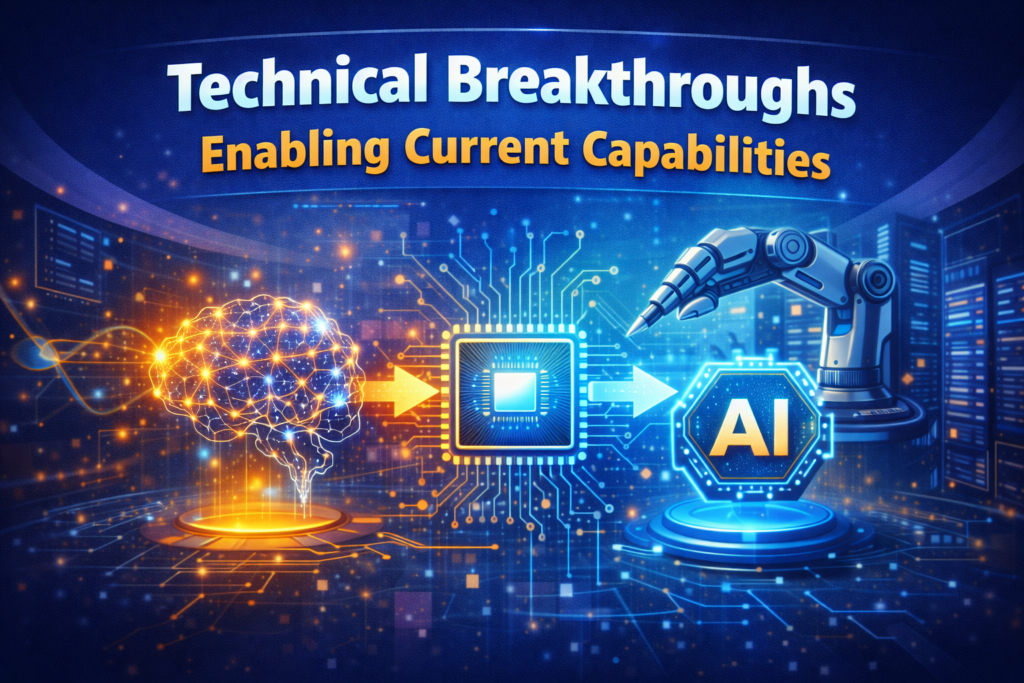
Section 4: Technical Breakthroughs Enabling Current Capabilities
1. The Context Window Expansion
Where early systems struggled beyond 4-10 seconds, 2026 platforms routinely generate coherent 5-10 minute sequences. This expansion results from architectural innovations:
Hierarchical Temporal Modeling: Systems now understand narrative structure at multiple timescales simultaneously—the micro-level of facial expressions, the scene-level of action sequences, and the macro-level of narrative arcs.
Memory-Augmented Generation: AI can now reference earlier parts of generation when creating later sections, maintaining consistency of characters, props, and narrative logic across extended durations.
2. Multi-Character Interaction Intelligence
Early systems excelled with single subjects but faltered with groups. Current platforms understand social dynamics, eye lines, and group composition:
Social Physics Modeling: Characters in groups display appropriate personal space, turn-taking in conversation, and status-based positioning.
Emotional Contagion Simulation: Emotions spread believably through crowds—panic that builds, laughter that becomes infectious, tension that mounts collectively.
3. World Consistency and Environmental Intelligence
Generated environments now exhibit internal logic and consistency:
Ecological Systems: Outdoor scenes include appropriate flora and fauna that interact believably with each other and the environment.
Architectural Coherence: Buildings follow structural principles, interiors match exteriors, and spaces feel lived-in rather than empty sets.
Temporal Environmental Effects: Weather systems evolve believably, light changes throughout days and seasons, and environments show appropriate wear and aging.
4. Audio-Visual Synchronization
The separation between visual and audio generation has dissolved:
Integrated Sound Design: Systems generate appropriate ambient sounds, sound effects, and music that synchronize perfectly with visual events.
Lip Sync and Vocal Expression: Character dialogue matches lip movements, with emotional tone reflected in both facial expression and vocal delivery.
Spatial Audio Intelligence: Sound behaves appropriately in different environments—echoes in caverns, muffling in snow, Doppler effects for moving objects.
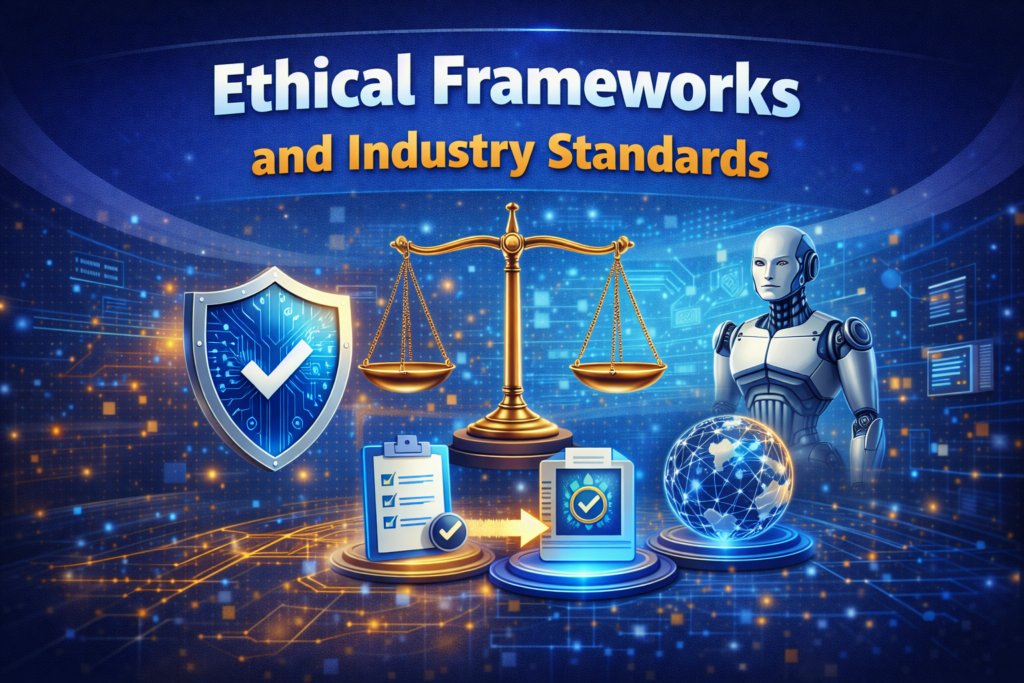
Section 5: Ethical Frameworks and Industry Standards
The Maturation of Ethical Practices
The chaotic early days of unregulated AI video generation have given way to established standards:
1. Consent and Compensation Systems
Digital representations of real people now operate under clear legal frameworks:
- Actors license their likeness through guild-negotiated contracts
- Individuals can opt out of training data or request removal
- Revenue sharing models ensure creators are compensated when their style or likeness is used
2. Provenance and Authentication
All professional platforms now embed cryptographic watermarks and metadata that:
- Verify AI generation versus human creation
- Identify which tools and data were used in creation
- Provide chain of custody for commercial content
- Enable content filtering based on generation method
3. Content Regulation and Rating Systems
AI-generated content automatically receives ratings based on:
- Analysis of content for age-appropriateness
- Identification of potentially harmful or misleading material
- Compliance with regional content regulations
- Transparency about synthetic nature where context demands
4. Bias Mitigation Standards
Industry-wide initiatives have significantly reduced problematic biases:
- Diverse training datasets curated with cultural consultation
- Regular bias audits and algorithmic adjustments
- User-controlled diversity parameters for generated content
- Cultural context understanding that avoids stereotyping
The Certification Ecosystem
A new professional certification landscape has emerged:
- AI Cinematography Certification: For professionals using AI in film production
- Ethical Prompt Engineering Certification: Ensuring responsible creation practices
- Synthetic Media Literacy Certification: For educators and communicators
- AI Content Verification Certification: For platforms and regulators
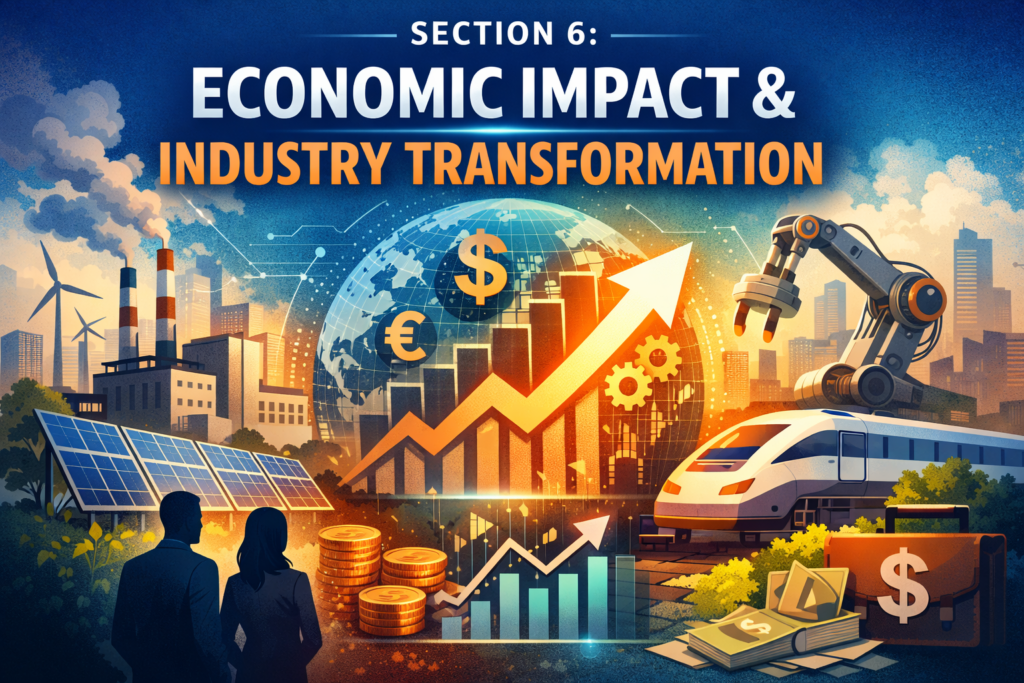
Section 6: Economic Impact and Industry Transformation
The New Creative Economy
AI video generation hasn’t eliminated jobs so much as transformed them:
1. The Specialization Effect
Where early fears predicted mass displacement, the reality has been specialization:
- Traditional animators now focus on character emotion and subtle performance
- Cinematographers concentrate on live-action scenes while AI handles complex visual effects
- Editors become “narrative architects” working across multiple generated variations
- New roles like “AI Visual Director” and “Prompt Cinematographer” have emerged
2. The Democratization Dividend
Small creators and developing regions have benefited enormously:
- Independent filmmakers can compete visually with studio productions
- Educational content creation is accessible to schools and communities worldwide
- Historical and cultural preservation through visualization is now feasible for endangered traditions
- Language barriers diminish as content can be regenerated in different cultural contexts
3. The Hyper-Personalization Market
A new content category has exploded: personally tailored video:
- Educational content adapted to individual learning styles and paces
- Marketing messages customized to individual customer journeys
- Therapeutic content generated for specific psychological needs
- Entertainment that adapts to viewer preferences and responses
4. The Visualization Economy
Previously internal or abstract concepts now have visual markets:
- Scientific hypotheses visualized before costly experimentation
- Architectural and urban planning proposals as immersive experiences
- Legal arguments and historical evidence brought to visual life
- Personal memories and family histories preserved through recreation
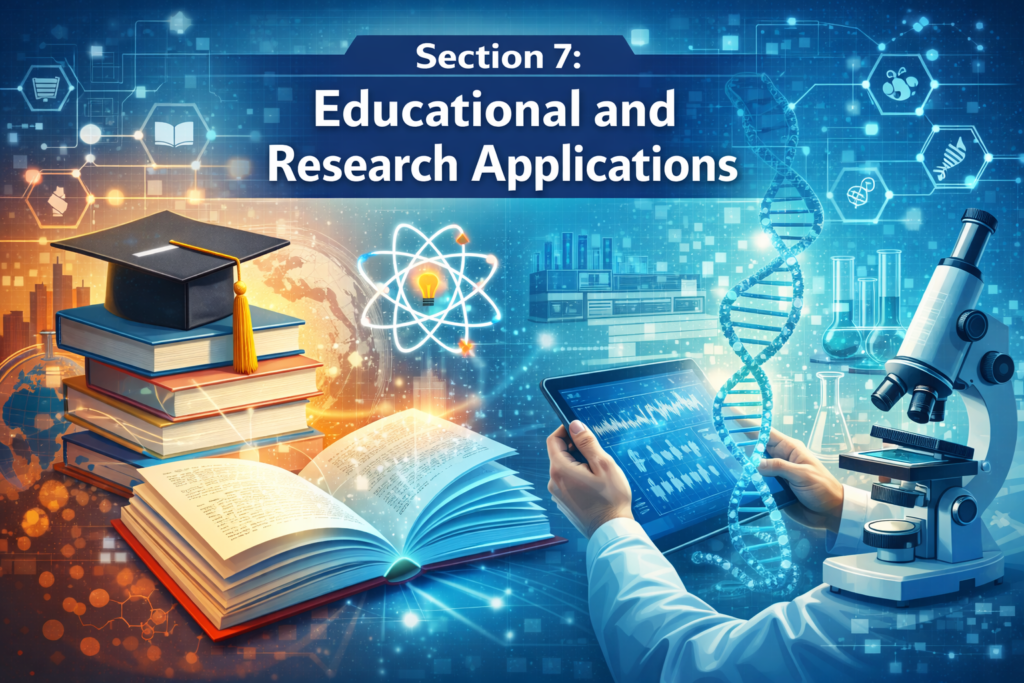
Section 7: Educational and Research Applications
Transformative Educational Tools
Educational institutions have integrated AI video generation at multiple levels:
1. Immersive Historical Learning
Students don’t just read about historical events—they experience them:
- Multiple perspective generations show events from different social positions
- “What if” scenarios explore alternative historical outcomes
- Primary sources come alive through contextual recreation
- Historical debates become embodied through visualized arguments
2. Scientific Concept Visualization
Abstract concepts gain immediate intuitive understanding:
- Quantum mechanics demonstrations at human scale
- Geological processes across millennia compressed to minutes
- Biological processes inside living organisms
- Mathematical concepts as spatial and dynamic experiences
3. Language and Cultural Acquisition
Language learning accelerates through contextual immersion:
- Vocabulary embedded in culturally accurate scenarios
- Idioms and expressions visualized literally then explained
- Cultural practices and traditions demonstrated authentically
- Accent and pronunciation through lip-synced examples
Research Enablement
The scientific method itself is transforming:
- Hypothesis Visualization: Researchers can see their theories in action before designing experiments
- Data Sonification and Visualization: Complex datasets become navigable visual landscapes
- Model Communication: Scientific models communicate findings through generated explanatory videos
- Interdisciplinary Translation: Concepts move between fields through visual metaphor rather than technical jargon
Section 8: The Creative Philosophical Shift
Redefining Originality and Authorship
The nature of creativity is being reexamined:
1. The Curatorial Creative
Much contemporary creation involves curating and directing AI rather than manual fabrication:
- Selecting from generated possibilities becomes a creative act
- Combining and refining AI outputs develops as artistic skill
- Prompt crafting emerges as literary/poetic form
- Style development involves training AI on personal aesthetic preferences
2. The Collaborative Mindset
The solitary genius model gives way to collaborative creation:
- Human-AI collaboration as dialogue rather than command
- Community style development through shared training
- Multi-creator projects with specialized AI tools
- Audience participation in evolving narratives
3. The Impermanent Artwork
Digital works are no longer fixed:
- Art that evolves based on viewer interaction or environmental data
- Narratives with multiple possible trajectories
- Content that updates based on real-world events
- Personalized versions for different viewers
4. The Authenticity Question
What constitutes “real” in synthetic media:
- Emotional authenticity despite synthetic origin
- Cultural authenticity through consultative generation
- Historical authenticity balancing accuracy and accessibility
- Personal authenticity in AI-assisted self-expression
Section 9: Future Trajectories – Beyond 2026
Near-Term Developments (2027-2028)
- Full Feature Generation: Coherent 90+ minute narratives with character development arcs
- Real-Time Generation: Interactive experiences generating visuals in response to user input
- Cross-Sensory Generation: Videos that include suggested smells, textures, or temperatures
- Dream Capture Integration: Translation of brain scan data into visual narratives
Medium-Term Evolution (2029-2032)
- Personal Reality Generation: Custom visual environments for entertainment, therapy, or work
- Historical Experience Recreation: Immersive experiences of historical events from multiple perspectives
- Educational Personalization: Entire customized curricula with generated explanatory content
- Therapeutic Applications: Generated scenarios for exposure therapy, empathy development, or memory work
Long-Term Considerations
- Consciousness and Creation: Philosophical questions about AI creative consciousness
- Reality Blending: Difficulty distinguishing generated from recorded experiences
- Memory Externalization: Using generation to preserve and share personal memories
- Cultural Evolution: How generated content influences cultural development and historical understanding
Section 10: Getting Started in 2026 – A Practical Guide
For Aspiring Creators:
- Begin with Educational Platforms: Most offer free tiers with learning modules
- Develop Cross-Disciplinary Skills: Combine AI knowledge with traditional film, art, or writing skills
- Join Creator Communities: Rapid evolution means community knowledge is essential
- Experiment with Multiple Platforms: Different tools suit different creative approaches
- Study Both Technology and Tradition: Understand AI capabilities and traditional creative principles
For Businesses:
- Start with Specific Use Cases: Internal training, marketing personalization, product visualization
- Develop Ethical Guidelines Early: Establish responsible use policies before scaling
- Upskill Existing Teams: Transition traditional roles rather than replace them
- Pilot with Clear Metrics: Test with measurable objectives before full implementation
- Consider Specialized Solutions: Industry-specific tools often outperform general platforms
For Educators:
- Integrate Gradually: Begin with supplementary materials before core curriculum
- Teach Critical Evaluation: Students must learn to assess AI-generated content
- Focus on Creative Process: Use AI to demonstrate possibilities rather than provide answers
- Address Ethical Considerations: Include discussions of authenticity, bias, and appropriate use
- Develop Hybrid Assignments: Combine AI generation with traditional creation and analysis
Conclusion: The Visual Language Revolution
As 2026 unfolds, text-to-video AI has matured from intriguing novelty to transformative tool. The technology hasn’t just created new ways to make videos—it has created a new visual language that operates at the intersection of linguistic description, cinematic tradition, and algorithmic interpretation. This language enables forms of expression previously limited to those with technical training, financial resources, or institutional access.
Yet with this capability comes responsibility. The ease of creation demands greater discernment about what deserves creation. The power of persuasion requires stronger ethics about persuasion’s purposes. The blurring of real and synthetic necessitates clearer frameworks for authenticity and trust.
The most compelling developments ahead may not be technical but human: how we integrate these tools into our creative processes, how we preserve human connection in increasingly synthetic media, how we ensure these technologies serve human flourishing rather than manipulation or displacement.
The blank screen awaiting textual instruction represents not just technological capability but human imagination seeking expression. The AI systems of 2026 provide remarkably sophisticated translation between imagination and visualization, but they cannot provide the imagination itself. That remains—and likely will always remain—a profoundly human capacity.
In this partnership between human creativity and artificial intelligence, we are learning not just how to create differently, but how to see differently, how to imagine differently, and ultimately, how to understand our own humanity differently. The video is generating, the story is unfolding, and we are all both its creators and its audience in this remarkable moment of visual revolution.
