AI tools for HR and employee management : For decades, human resources operated at the intersection of administration and intuition. You managed payroll, tracked compliance, conducted performance reviews, and made gut-level decisions about talent based on incomplete information. If you were sophisticated, you had dashboards that showed what had already happened. If you were visionary, you wished you could predict what might happen next.
By early 2026, this landscape has been fundamentally transformed. We have entered the era of the augmented HR function—where AI agents do not merely automate tasks but actively participate in workforce strategy, surfacing insights that human leaders would never have discovered on their own and executing complex workflows with minimal oversight.
The transformation is visible across the technology landscape. ADP has launched a suite of persona-based AI agents purpose-built for payroll, tax registration, and workforce analytics, leveraging a data platform spanning 42 million wage earners . Betterworks has rearchitected its performance platform around an AI-native foundation, synthesizing goals, feedback, and development activity into actionable intelligence . DianaHR has deployed the industry’s first production-grade onboarding agent that can move a new hire from signed offer letter to payroll without human intervention . 15Five has introduced Amaya, a conversational AI agent that answers complex questions about engagement, performance, and retention using secure internal data .
For HR leaders and business owners, this shift presents both unprecedented opportunity and significant strategic complexity. The tools profiled in this guide are no longer optional enhancements; they are operational infrastructure. The question is no longer “Should we use AI in HR?” but “Which AI capabilities do we need, and how do we integrate them into a coherent workforce strategy?”
This guide provides a strategic, function-by-function analysis of AI tools for HR and employee management in 2026. It is organized not by vendor popularity but by business outcome: from enterprise-grade workforce intelligence to SMB-focused automation, from performance management to talent acquisition, from employee support to job architecture governance. Each section identifies category leaders, quantifies documented impact, and provides implementation criteria calibrated to organization size and maturity.
Read More : AI tools for business branding and logo design
AI video maker without watermark 2026
AI video maker without watermark 2026
AI video generator with subtitles automatically
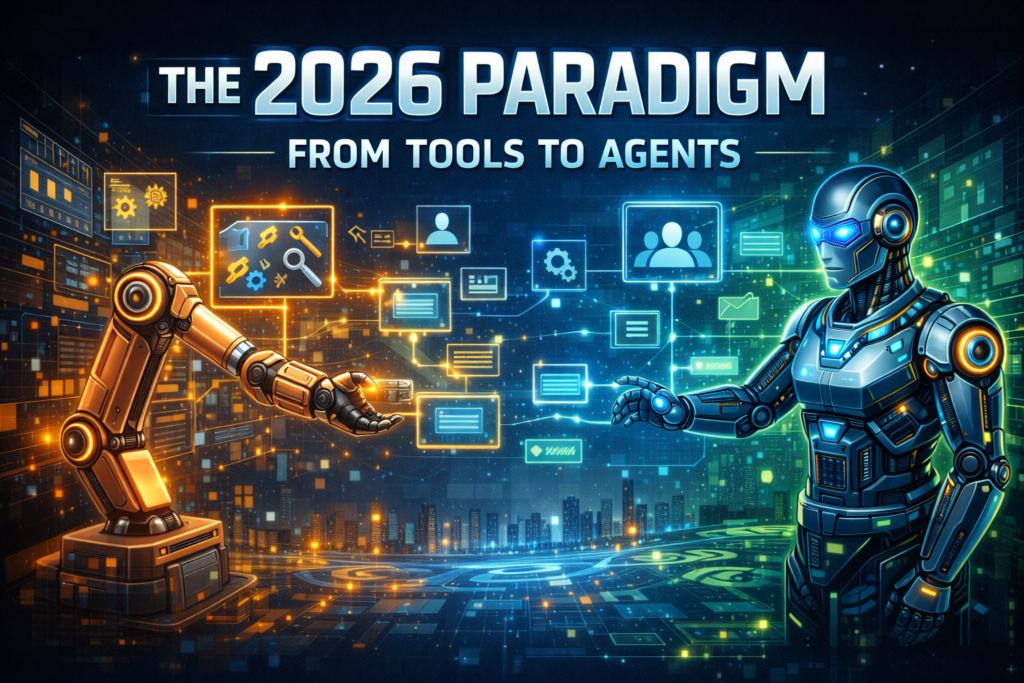
Part 1: The 2026 Paradigm – From Tools to Agents
The Three Generations of HR Technology
To understand the 2026 landscape, we must distinguish between three fundamentally different approaches to HR technology:
Generation 1: Administrative Systems (Legacy)
Traditional HR information systems (HRIS) and payroll platforms automate record-keeping but require human data entry at every step. They answer “what happened” questions after the fact and provide no predictive capability. They are systems of record, not systems of intelligence.
Generation 2: Analytics Platforms (Recent Past)
HR analytics tools aggregate data from multiple sources to create dashboards and reports. They help identify trends—turnover rates by department, engagement scores over time—but require human interpretation and cannot autonomously act on insights. They describe problems but do not solve them.
Generation 3: Agentic HR (2026)
The current generation is defined by agentic HR systems—AI agents that do not merely analyze data but autonomously execute workflows, proactively surface insights, and recommend actions . As Sreeni Kutam, president of global product and innovation at ADP, explains: “We’re reimagining the way work gets done, with purpose. Our persona-based AI agents are designed for people, helping employees, managers, HR and payroll practitioners all succeed in their unique roles through tailored, intelligent support” .
What Agentic HR Actually Delivers
Agentic HR systems differ from their predecessors in four critical ways:
1. Autonomous Workflow Execution
Traditional HR software requires users to manually input data. Agentic systems function as autonomous workers. DianaHR’s Onboarding Agent, for example, reads an email forwarding a new hire’s offer letter, verifies signatures, extracts relevant information, and inputs the employee’s details into payroll—all without human intervention . A task that typically requires 30 minutes of skilled HR expert time is completed in seconds.
2. Proactive Intelligence
Rather than waiting for users to query data, agentic systems continuously monitor workforce signals and surface insights before problems escalate. 15Five’s Amaya can detect patterns in engagement data that predict retention risk, while its Discovery Feed acts as “a smart assistant to spot early signals before they become problems” .
3. Persona-Based Design
Leading platforms now deliver tailored AI experiences for different user types. ADP Assist offers distinct agents for employees, managers, HR practitioners, and payroll specialists, each providing contextually relevant support . A payroll practitioner sees variance alerts; a manager sees team performance insights; an employee sees policy guidance.
4. Natural Language Interaction
The command-line interface of HR systems is dying. Modern platforms enable conversational interaction: “Promote Jordan Smith” or “who are my direct reports earning less than $25 per hour?” ADP Assist interprets these natural language requests and executes the underlying workflow, dramatically reducing time spent navigating complex menus .
The Data Advantage
The effectiveness of agentic HR systems depends on the quality and scale of their training data. ADP’s global data platform spans 1.1 million clients across 140 countries and 42 million wage earners, providing an unmatched foundation for intelligent automation . As Holger Mueller of Constellation Research notes: “ADP’s data advantage enables higher-quality insights, stronger predictive capabilities and more relevant recommendations than AI solutions built on generic datasets” .
For organizations evaluating HR technology, this data advantage is a critical consideration. A platform that learns only from your internal data will never match the predictive power of one trained on millions of workforce interactions across global regulatory environments.
Part 2: The Enterprise Intelligence Layer – Performance, Engagement, and Workforce Strategy
Betterworks NextGen: The AI-Native Performance Platform
Betterworks has launched a comprehensive rearchitecture of its performance management platform, called NextGen, with more than 400 new features built on an AI-native foundation . The release reflects a fundamental shift in how organizations think about performance: from annual reviews to continuous intelligence.
What It Delivers:
The platform synthesizes data from goals, feedback, conversations, and development activities to form a multidimensional view of performance over time. Rather than treating AI as a separate layer, Betterworks has embedded it into day-to-day performance activity, turning data into direction .
Key Capabilities:
- AI-Powered Performance Summaries: The platform synthesizes goals, feedback, and achievements into a narrative view of performance, surfacing themes, progress trends, and development insights. This reduces recency bias and streamlines review preparation, shifting performance conversations away from manual compilation work .
- Manager Command Centre: A consolidated workspace that brings together goals, feedback, recognition, and actions into a unified view. Previously siloed signals are now integrated, giving managers an immediate way to see what requires attention. Betterworks says this forms the basis for more AI-driven coaching and decision support as the product evolves .
- External Feedback Integration: The platform can collect structured input from customers, partners, and other external collaborators without requiring them to have full platform access. This expands the performance signal beyond internal reporting lines and can feed into goals, feedback, and development conversations .
- Complex Structure Support: Designed for organizations that do not operate in simple hierarchies, the platform supports multi-geo environments and matrix management structures. Multiple leaders can contribute to goals, feedback, and performance evaluations, creating a broader view of performance without adding process overhead .
Governance and Controls:
Betterworks includes granular controls for responsible AI use. Administrators can switch AI features on or off by department, region, or group, enabling phased rollouts and compliance with regional requirements. The platform also provides visibility into usage patterns .
Industry Validation:
Fosway Group’s Chief Insights Officer David Perring commented: “Betterworks have taken a bold step to meet the new performance challenge. Through their re-platforming and ambitious roadmap, they are breaking away from the past and reimagining a future with total workforce intelligence, advanced workforce planning, and precise skills insight” .
15Five Amaya: The Conversational HR Intelligence Agent
15Five, an AI-powered performance management platform used by over 3,000 companies, has debuted Amaya, a powerful “Ask-Me-Anything” AI agent built directly into its platform . Amaya represents a new category of HR tool: the strategic thought partner.
What It Delivers:
Amaya provides a ChatGPT-like conversational experience that utilizes data from across all 15Five features to answer complex questions that would otherwise require significant manual analysis. Unlike standalone AI assistants that require users to upload sensitive employee data into unsecured environments, Amaya operates securely within 15Five and draws directly from an organization’s existing people data .
Questions Amaya Can Answer:
- “What are employees saying about their managers in recent reviews?”
- “Which factors are most strongly influencing engagement?”
- “How do engagement or performance signals differ by team or department?”
- “Are my top performers engaged and compensated at market rates?”
- “What’s the true cost of replacing a high performer?”
- “Which teams are most at risk of burnout based on engagement and workload trends?”
Capabilities and Roadmap:
Amaya can summarize patterns, highlight differences between groups, and surface key themes from both quantitative and qualitative data. When historical data is available, it highlights trends and patterns to support better decision-making. Responses include the source of the data and supporting charts or graphs, ensuring transparency .
Future capabilities will include proactive insight surfacing, action recommendations, and the ability to create action plans, send recognition, and give timely nudges .
The Insights Dashboard:
Alongside Amaya, 15Five introduced a new AI-powered Insights Dashboard and Home Page. These provide a dual experience for HR leaders:
- The Dashboard: A structured space for intentional exploration of known business questions
- The Discovery Feed: A dynamic stream that surfaces unexpected patterns and outliers, acting as a smart assistant to spot early signals before they become problems
The AI agent powering the Insights Dashboard proactively flags potential risks (disengagement or retention threats), quantifies the business impact of those risks, and recommends next steps. Leaders can turn insights into immediate action by creating tailored action plans, sending recognition, or nudging employees at just the right moment .
Anthony Onesto, VP at 15Five, describes Amaya as “a powerful sounding board” that “surfaces personalized, timely answers to questions that would otherwise take significant time to answer. This is how HR becomes more measurable, credible, and impactful” .
Intellect and Adrenalin HR TeamSpace: Collaborative AI for HR Teams
Intellect Design Arena and Adrenalin eSystems have jointly launched HR TeamSpace, a secure, collaborative AI environment for HR teams built on Intellect’s Purple Fabric Open Business Impact AI platform .
The Problem It Solves:
HR teams today face a fundamental tension. On one side are labor-intensive manual operations that consume time and effort. On the other are fragmented, one-off experiments with standalone AI tools that may generate interest but rarely translate into consistent, enterprise-wide adoption .
What It Delivers:
HR TeamSpace addresses this gap by providing HR organizations with a shared environment where teams can deploy AI with confidence, collaborate on use cases, and scale adoption. Powered by Purple Fabric, it brings together ready-to-use, domain-trained AI agents with the flexibility to build and configure organization-specific agents aligned to specific use cases across the employee lifecycle .
Key Capabilities:
- Address fragmented AI adoption by replacing manual tasks and isolated experiments with a shared AI environment
- Deploy AI agents with enterprise-grade controls for security, governance, and compliance
- Leverage AI agents to automate high-volume and manual HR work, such as sourcing candidates, personalized coaching feedback, and policy-related employee queries
- Operationalize AI across the “Talent A.D.O.R.E Framework”: Acquisition, Development, Operations, Remuneration, and Engagement
- Scale AI adoption across the organization with consistency and accountability
Pricing and Accessibility:
HR TeamSpace is priced at ₹99,500 per month for up to 50 users (approximately $1,150 USD), bringing enterprise-grade AI capabilities within reach of functional teams through a simple subscription on a proven platform .
Arun Jain, Chairman and Managing Director of Intellect Design Arena, explains the strategic importance: “Enterprise AI delivers real value only when organizations move beyond pilots and isolated experiments to adoption at scale. Purple Fabric was created to enable this shift securely and responsibly, with governance and measurable outcomes built in from the start” .
Part 3: The Operational Automation Layer – Payroll, Onboarding, and Employee Support
ADP Assist Agents: The 75-Year Data Advantage
ADP has introduced a comprehensive suite of AI agents designed to solve real workforce challenges across the employee lifecycle. Built on ADP’s global data platform spanning 1.1 million clients across 140 countries and 42 million wage earners, these agents represent the most data-rich HR AI offering in the market .
Design Philosophy:
ADP’s approach is deliberately human-centric. “As we continue to build an AI-augmented workforce, we firmly believe it is imperative to keep people at the center,” said Maria Black, president and CEO of ADP. “We know that work is deeply personal and our AI solutions are designed with a human-centric approach that enhances the value and meaningful connection we derive from our work” .
Key Agent Capabilities:
- Payroll Variance Agent: Automatically audits payroll for variances, suggesting and facilitating remediations under human oversight. This makes payroll more efficient and accurate .
- Tax Registration Agent: Proactively identifies when clients have missing or incomplete tax IDs for state or local jurisdictions and guides them through every step of the registration process .
- HR Policy Agent: Creates and delivers personalized, curated answers for frequently asked questions based on clients’ distinct employee handbooks and policies, removing help desk responsibilities from practitioners .
- Analytics Agent: Creates, executes, and analyzes custom reports and visualizations based on simple search queries through chat, creating an intuitive and interactive experience. It can also analyze employee-level data to create easily actionable dashboards and presentation-ready workforce reports .
- Talent Action Agent: Initiates key talent actions instantly, such as promotions, simply by the user typing what they want to do. Interpreting requests like “promote Jordan Smith” dramatically reduces time spent navigating HR workflows .
The Data Foundation:
ADP’s integrated data architecture enables intelligence to be built directly into its agents. The combination of ADP’s proprietary datasets and unique insights from servicing clients enables more personalized experiences while maintaining security and privacy by design with embedded ethical AI principles .
DianaHR Agentic Onboarding: Autonomous Workflow for SMBs
DianaHR, founded by Upeka Bee (former Head of Engineering at Gusto), has deployed what it describes as the industry’s first production-grade AI agent capable of executing the end-to-end employee onboarding workflow with minimal human intervention .
What It Delivers:
Unlike traditional HR software that requires manual data input, DianaHR’s Onboarding Agent functions as an autonomous worker. It is built to move a new hire from a signed offer letter into the payroll system correctly and securely .
How It Works:
Kicking off the onboarding process requires no training. Users simply forward an onboarding request via email to DianaHR. The Onboarding Agent intelligently reads the email to initiate the process:
- It determines whether this is a new employee onboarding. If so, it requests the signed letter if not already included
- It checks whether the offer letter contains all relevant signatures. If signatures are missing from either party, it drafts a request for a fully signed document
- It verifies that all relevant new hire information is present in the offer letter. Just as a human HR assistant would, it asks for any missing fields
- Once all requirements are obtained, it inputs the new employee’s details into the payroll system
The Business Impact:
Onboarding a single employee typically requires at least 30 minutes of focused work from a skilled HR expert to ensure tax compliance and payroll accuracy. For founders and operational managers without HR backgrounds, this process takes significantly longer and carries a high risk of error .
DianaHR’s Agentic Onboarding eliminates this bottleneck entirely, allowing companies to scale their headcount without further burdening their HR backoffice workload. The platform as a whole saves business owners over 15 hours a week and cuts HR costs by 60 percent .
The Human-in-the-Loop Model:
While most functions are fully automated, each client is assigned a human DianaHR specialist who coordinates service and offers expertise as needed. This “human-in-the-loop” AI model combines the efficiency of automation with the judgment of human professionals .
Part 4: The Talent Acquisition Layer – AI-Powered Recruiting
Peoplebox.ai Nova: The AI Recruiter
Peoplebox.ai has emerged as a leading innovator in AI-powered recruiting, with its AI recruiter Nova fundamentally reimagining how companies attract and evaluate talent . The platform unifies AI recruiting, OKR alignment, performance management, and employee engagement in a single system.
What Nova Delivers:
Nova is a virtual recruiting assistant designed to help HR leaders and hiring managers hire smarter, faster, and fairer. It handles everything from resume parsing and screening to AI-powered structured interviews, dramatically cutting hiring cycles .
Key Capabilities:
- AI-Powered Resume Screening: Nova automatically parses and screens resumes, evaluating candidates against job requirements in minutes rather than weeks .
- Automated Structured Interviews: The platform conducts AI-powered interviews with built-in bias detection, ensuring consistent evaluation across candidates .
- Candidate Authenticity Checks: In an age of fake resumes and AI-generated profiles, Nova verifies candidate details, ensuring only genuine and qualified profiles move forward .
- Skills Evaluation and Fraud Detection: Beyond filtering candidates, it evaluates skills and detects fraudulent representations .
- OKR and Performance Integration: Unlike most recruiting tools that stop at hiring, Peoplebox.ai connects recruitment decisions to employee impact and business outcomes through built-in OKR tracking and performance management .
The Business Impact:
Organizations using Nova report faster hiring cycles (reducing time-to-hire by up to 70%), better quality hires, and more diverse, bias-free recruiting. By connecting hiring with performance data, the platform ensures HR contributes directly to business growth .
Who Should Use It:
Peoplebox.ai is particularly valuable for scaling startups needing lean but powerful HRMS with automation, high-volume recruiters wanting to shortlist candidates in minutes, and global teams requiring AI-powered recruiting with compliance-ready HR operations .
Part 5: The Job Architecture Layer – Governance and Standardization
JDXpert JDX+: AI-Guided Job Information Management
JDXpert, a leader in job information management for enterprise HR teams, has launched JDX+, a next-generation product that helps organizations standardize, govern, and analyze job information with AI-guided workflows and a first-of-its-kind Job Architecture Builder .
The Problem It Solves:
In most enterprises, job information lives in too many places—HRIS, ATS, compensation tools, spreadsheets—creating inconsistent job definitions, slow approval cycles, and compliance exposure. Job architecture efforts often become “archi-torture” projects that are expensive, manual, take months or years, and quickly fall out of date .
JDXpert’s research found that 92% of organizations with high job and skills data coverage are planning major governance changes in the next 12-18 months because coverage without control doesn’t deliver value .
Key Capabilities:
- Job Architecture Builder: Enables teams to create a governed job architecture using existing frameworks, then keep it current as the organization changes. Guided steps move teams from blueprint to framework to level guide to mapping and activation, completing job architecture work in weeks rather than years .
- Standardized Job Template: Provides 100+ out-of-the-box fields with configurable rules (conditional logic, pre-fill, field relationships) and role-based controls, ensuring job data stays consistent, comparable, and reportable across the enterprise .
- Workflow and Audit Trails: Task-based workflows with SLAs, in-app and email notifications, and exportable, audit-ready history of edits, reviews, and approvals keep downstream systems clean and give compliance teams confidence .
- Analytics and Queries: Natural-language queries return AI-guided direct answers, replacing spreadsheet projects with in-product insights .
- Integration Layer: JDX+ coexists with HRIS, ATS, and compensation tools. The HRIS remains the system of record for employee data; JDX+ is the system of entry for job information .
AI Assistance:
JDX+ uses AI to assist with job architecture, importing and enriching existing job descriptions, and drafting job content using JDXpert’s proprietary library—always with human-in-the-loop review .
Justin Raniszeski, CEO of JDXpert, explains: “In today’s enterprise, job information is constantly evolving, yet most organizations still treat it as a one-time project. With JDX+, job data becomes a governed, audit-ready asset instead of a recurring headache” .
Part 6: The SMB Layer – Accessible AI for Growing Companies
Jotform AI Agents: No-Code HR Automation
For small and mid-sized businesses without dedicated HR teams, Jotform AI Agents provides an accessible entry point to HR automation. The platform enables the creation of voice, chat, email, SMS, and presentation agents trained on your own data, with a library of over 7,000 agent templates and a no-code training interface .
HR Applications:
A startup might deploy multiple HR-focused agents:
- An HR agent to guide new employees through training workflows
- A policy agent to answer employee questions about benefits and procedures
- A recruitment agent to screen and route candidate inquiries
Compliance and Integration:
Jotform AI Agents meet PCI and GDPR compliance requirements and include HIPAA-friendly privacy features, making them suitable for regulated industries. The agents integrate with dozens of third-party tools, allowing them to set appointments, route file uploads, and trigger automated workflows .
Pricing:
- Starter (free): Five agents, 10 million characters training data, 100 monthly conversations
- Bronze ($39/month): 25 agents, 20 million characters, 1,000 monthly conversations
- Silver ($49/month): 50 agents, 50 million characters, 2,500 monthly conversations
- Gold ($129/month): 100 agents, 100 million characters, 10,000 monthly conversations
Part 7: The Selection Matrix – Matching Tool to Business Reality
Scenario A: The Enterprise with Complex Global Operations
Primary Need: Comprehensive workforce intelligence, compliance across jurisdictions, integration with existing systems
Recommended Solutions:
- ADP Assist Agents for payroll, tax, and HR operations (enterprise-grade data foundation)
- Betterworks NextGen for performance management at scale
- JDXpert JDX+ for job architecture governance
- 15Five Amaya for strategic workforce intelligence
Rationale: Enterprise organizations require platforms that combine depth, governance, and global compliance. ADP’s 42 million wage earner dataset provides unmatched intelligence; Betterworks supports complex matrix structures; JDX+ ensures job data consistency across systems.
Scenario B: The Mid-Market Growth Company (100-1,000 employees)
Primary Need: Integrated talent management, performance alignment, recruiting efficiency
Recommended Solutions:
- Peoplebox.ai with Nova AI recruiter for unified recruiting and performance management
- 15Five for engagement and performance insights
- HR TeamSpace for collaborative AI adoption across HR functions (starting at ~$1,150/month)
Rationale: Growing companies need platforms that scale with them while maintaining integration. Peoplebox.ai‘s connection between hiring and OKRs ensures recruitment drives business outcomes; 15Five provides the strategic intelligence layer.
Scenario C: The Small Business (10-100 employees)
Primary Need: Automation of manual HR tasks, employee self-service, cost efficiency
Recommended Solutions:
- DianaHR for agentic onboarding and HR-as-a-service (saves 15+ hours/week)
- Jotform AI Agents for customized HR workflows and employee support
- Google Workspace for AI-powered productivity and collaboration
Rationale: Small businesses cannot afford dedicated HR teams. DianaHR’s autonomous onboarding eliminates the highest-friction HR task; Jotform enables customized workflows without technical expertise.
Scenario D: The HR Team Scaling AI Adoption
Primary Need: Governance, collaboration, measurable business impact
Recommended Solution: Intellect and Adrenalin HR TeamSpace
Rationale: For organizations moving from isolated AI experiments to systematic adoption, HR TeamSpace provides a governed environment where teams can deploy pre-built agents, share use cases, and ensure consistency. The subscription model makes enterprise-grade AI infrastructure accessible at predictable cost .
Part Eight: The Implementation Discipline – From Tools to Transformation
The Integration Imperative
The single greatest cause of failed HR technology initiatives is not selecting the wrong tools; it is failing to connect them correctly. Fragmented employee data, manual exports, and reconciliation work erode the productivity gains that AI tools are purchased to deliver.
JDXpert’s research underscores this challenge: 92% of organizations with high job and skills data coverage are planning major governance changes because coverage without control doesn’t deliver value . The lesson is clear: data integration and governance must precede AI deployment.
A 90-Day Implementation Framework
Phase 1 (Days 1-30): Audit and Selection
- Audit current HR processes and pain points. Where are the bottlenecks? What manual work consumes disproportionate time?
- Identify the single biggest friction point (onboarding, payroll variance, performance review compilation, candidate screening)
- Select one tool addressing that specific challenge
- Verify integration feasibility with your existing HRIS, payroll, and collaboration tools
Phase 2 (Days 31-60): Pilot and Validation
- Deploy to a limited population (one department, one manager, or new hires only)
- Establish baseline metrics (time to onboard, payroll error rate, review completion time)
- Run the tool alongside existing processes
- Measure actual improvement against baseline
Phase 3 (Days 61-90): Scale and Optimize
- If pilot demonstrates clear ROI, expand to full deployment
- Document lessons learned and refine configurations
- Establish ongoing monitoring cadence
- Begin evaluating next priority area
The Human-in-the-Loop Imperative
Even the most sophisticated AI HR systems require human oversight. ADP’s design principles “keep the human at the center to amplify culture, creativity and meaningful connection at work” . DianaHR’s model pairs AI automation with human specialists who coordinate service and offer expertise . JDX+ includes AI assistance “always with human-in-the-loop review” .
The optimal division of labor:
- AI handles: Repetitive workflows, data processing, pattern recognition, initial candidate screening, policy Q&A, variance detection
- Humans handle: Strategic judgment, exception management, relationship building, cultural decisions, final approvals
Part Nine: The Future Trajectory – From Automation to Augmentation
The Agentic Horizon
The truly disruptive impact of AI in HR will be the transition from task automation to role augmentation. 15Five’s vision for Amaya includes proactive insight surfacing, action recommendations, and timely nudges—the agent functioning as a true strategic partner . Betterworks’ roadmap points toward “AI-driven coaching and decision support” embedded in manager workflows . ADP’s persona-based agents are designed to “empower and accelerate people at work and move them closer to what they love doing” .
The Strategic Imperative
For HR leaders, this trajectory carries an urgent implication: the organizations that win in the next three years will be those that treat AI not as a tool for efficiency but as a platform for augmentation.
They will recognize that the gap between “managing people” and “enabling people” is closing—and that the HR functions on the right side of that gap will capture disproportionate advantage in attracting, developing, and retaining talent.
They will understand, as Fosway Group’s David Perring articulated, that the aim is “to provide data-driven perspectives that enable radical advances in individual, team, and organisational performance, especially in a workforce comprising both people and AI” .
Conclusion: AI tools for HR and employee management
The 2026 AI tools for HR and employee management landscape is no longer a collection of interesting experiments. It is a mature, structured market with clear categories, proven ROI, and accelerating adoption across every organization size.
The distinction that separates leading from lagging HR organizations is no longer “Do we use AI?” It is “Have we architected our workforce function around agentic principles?”
Leading organizations do not ask “Which HR tool should we buy?” They ask “Which workforce workflows, if redesigned around autonomous agent capabilities, would deliver the greatest value in efficiency, accuracy, and strategic insight?”
They do not ask “How do we get our team to use this software?” They ask “How do we retrain our HR professionals from administrative processors to strategic interpreters of AI-generated workforce intelligence?”
They do not ask “Is this platform secure?” They ask “Does this platform provide the governance controls, data integration, and explainability we need to trust autonomous workforce decisions?”
The platforms profiled in this guide—ADP Assist for enterprise operations, Betterworks and 15Five for performance intelligence, DianaHR for SMB automation, Peoplebox.ai for AI recruiting, JDXpert for job architecture governance, HR TeamSpace for collaborative AI adoption—represent the current state of the art.
But the art is advancing rapidly. The organizations that win in the next five years will be those that recognize AI in HR is not a technology replacement project. It is a human augmentation project. It requires rethinking not just how work is processed, but how people are developed, how potential is identified, and how organizations learn.
The tools are ready. The integration pathways are mapped. The ROI data is unambiguous.
The only remaining variable is whether you will build this augmented HR function with strategic intention—or continue managing people with administrative tools while your competitors build intelligent, agentic workforce capabilities that unlock human potential at scale.

1 thought on “AI tools for HR and employee management”