AI tools for business forecasting and planning : For decades, business forecasting followed a predictable but deeply flawed pattern. You extracted historical data into spreadsheets, applied formulas that assumed the future would resemble the past, and generated static reports that were already outdated by the time they were distributed. If you were sophisticated, you hired data scientists to build custom models—expensive, slow, and nearly impossible to maintain as your business evolved.
By early 2026, this model has been permanently dismantled. We have entered the era of agentic forecasting—systems that do not merely analyze historical data but autonomously interpret business context, build predictive models, and deliver actionable foresight without requiring data science teams or manual intervention .
The transformation is visible across the technology landscape. Pecan AI has launched predictive agents that let business teams ask questions directly against raw data and receive predictions back, with the system handling everything from model building to validation . Board has partnered with Microsoft to embed domain-specific AI agents directly into enterprise planning workflows across finance, supply chain, and merchandising . Nixtla has raised $16 million to advance time series intelligence, delivering up to 42% more accurate forecasts than traditional methods .
For business leaders, this shift presents both unprecedented opportunity and significant strategic complexity. The tools profiled in this guide are no longer optional enhancements; they are operational infrastructure. The question is no longer “Should we use AI for forecasting?” but “Which AI forecasting capabilities do we need, and how do we integrate them into a coherent planning architecture?”
This guide provides a strategic, function-by-function analysis of AI forecasting and planning tools in 2026. It is organized not by vendor popularity but by business use case: from enterprise-wide planning platforms to specialized time series intelligence, from financial forecasting to demand and inventory optimization. Each section identifies category leaders, quantifies documented impact, and provides implementation criteria calibrated to business size and maturity.
Read More : AI tools for real estate business marketing
AI tools for local business marketing
AI tools for dropshipping business automation
Free AI Tools for Instagram Reels Creation
Part 1: The 2026 Paradigm – From Descriptive to Predictive to Agentic
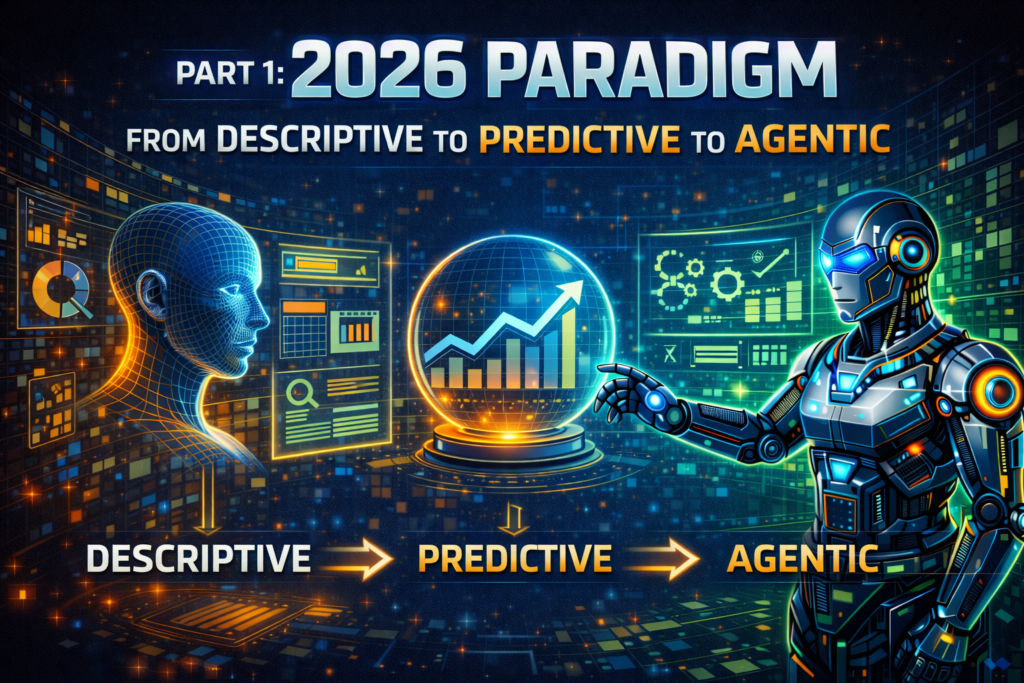
The Three Generations of Forecasting
To understand the 2026 landscape, we must distinguish between three fundamentally different approaches to forecasting:
Generation 1: Descriptive Analytics (Historical)
Traditional business intelligence tools report what happened. They aggregate historical data into dashboards and reports, answering questions like “What were our sales last quarter?” This is useful for understanding the past but provides no insight into the future.
Generation 2: Predictive Analytics (Statistical)
Machine learning models analyze historical patterns to forecast future outcomes. These systems require data science expertise to build and maintain, and they operate within bounded parameters. They answer questions like “What are our expected sales next quarter based on historical trends?” but cannot adapt to changing business contexts without manual retraining.
Generation 3: Agentic Forecasting (Autonomous)
The 2026 breakthrough is agentic forecasting: systems that autonomously interpret business data, build predictive models, validate their accuracy, and deliver actionable predictions—all without human intervention . As Zohar Bronfman, CEO of Pecan AI, explains: “Predictions are probably one of the hallmarks of successful businesses. You don’t need to code. You don’t have to do anything. The system does everything for you” .
The Agentic Advantage
Agentic forecasting systems differ from their predecessors in four critical ways:
1. Autonomous Model Building: Traditional predictive analytics requires data scientists to manually select algorithms, engineer features, and validate models. Agentic systems break down the predictive workflow into subtasks, automatically building and validating models based on your specific data structure .
2. Continuous Adaptation: Every business has its own unique “fingerprint”—its own schema, data patterns, and operational reality . Agentic systems continuously learn from new data, adapting their models as your business evolves rather than requiring periodic manual retraining.
3. Granular Signal Processing: Modern agentic systems can consider up to 1,500 data points to forecast outcomes before they happen, dramatically expanding the window for intervention . This enables proactive rather than reactive decision-making.
4. Natural Language Interaction: Business teams can ask questions directly—”What will our revenue be next year?”—and receive predictions back without writing code or engaging data science resources .
Part 2: The Enterprise Planning Layer – Platforms for Organization-Wide Forecasting
Board Agents + Microsoft Foundry: Domain-Specific AI for Enterprise Planning
Board, one of the leading Enterprise Planning Platforms, has launched Board Agents built on Microsoft Foundry—an intelligent suite of domain-specific, enterprise-ready AI agents that support real-world planning decisions across finance, supply chain, and merchandising .
What It Delivers:
The initial release includes FP&A and Controller Agents for the Office of Finance, with Merchandiser and Supply Chain Agents to follow. These agents are built natively into the Board Enterprise Planning Platform, providing a secure, governed foundation for applying agentic AI to high-impact planning use cases .
Key Differentiators:
- Persona-based, use-case specific agents: Board provides a network of intelligent agents designed for specific planning roles and use cases, ensuring they’re contextually aware and deliver immediate, relevant value .
- Collaborative multi-agent orchestration: For complex planning scenarios, Board Agents work together, drawing on one another’s expertise to address multi-dimensional decisions that span functions and priorities .
- Deep awareness of a company’s planning model: Board Agents are natively integrated into the Board Platform and operate on the same data, assumptions, and calculations teams already use .
- Integrated forecasting and scenario planning: Board Agents work in concert with Board Foresight to support advanced predictive analysis and scenario planning, helping teams assess trade-offs, model outcomes, and understand the external factors shaping performance .
Enterprise Validation:
As Adam Hancock, Vice President of Financial Planning & Analysis at EBSCO Industries, notes: “What impresses me most is the FP&A Agent’s ability to triangulate. It takes our detailed balance sheet and income statement and synthesizes everything into clear, actionable insights—incredibly valuable for us at EBSCO” .
Governance and Trust:
Peter Skov, Senior Director of EMEA at Microsoft, emphasizes: “Deploying AI in the enterprise requires flexibility, governance, and a foundation of trust. Built on Microsoft Foundry, Board Agents are designed using a multi-agent orchestration approach to quickly adapt as AI technology evolves, while maintaining strong ethical controls for accuracy, security, and data privacy” .
Availability: The FP&A and Controller Agents will be available globally starting March 31, 2026, and will also be offered through the Microsoft Marketplace .
JustPerform: AI-Powered Financial Planning for Mid-Market and Enterprise
insightsoftware’s JustPerform platform delivers AI-powered financial planning capabilities specifically designed for FP&A teams. Now available in the DACH region (Germany, Austria, Switzerland), the cloud-based EPM platform enables finance teams to build planning models, connect departmental budgets, and create forecasts without IT dependency .
What It Delivers:
JustPerform addresses the common challenges faced by finance teams working with decentralized spreadsheets: data consistency issues, version control problems, and time-consuming manual consolidation processes. The platform provides a centralized environment where finance teams can build planning models using point-and-click configuration, connect budgets across departments with automatic update propagation, and receive AI-powered insights to optimize their forecasts .
Core Planning Capabilities:
- Business-User Configuration: Finance teams can build planning models using an Excel-like interface that converts formulas into multi-dimensional logic without coding .
- Automated Data Propagation with Real-Time Updates: Budget updates automatically flow across connected plans, eliminating manual consolidation and reducing version control issues, with clear visibility into key variances .
- Predictive Insights and Guidance: Native AI analyzes planning data to surface trends and anomalies, providing contextual recommendations that help teams identify issues early and improve forecasts .
- Excel Integration: JustPerform works with Microsoft Excel through native connectors, allowing teams to continue using familiar tools while gaining centralized version control, audit trails, and real-time synchronization capabilities .
- Guided Workflows: Pre-configured process templates with step-by-step guidance help teams maintain consistency and onboard new users more quickly. Conversational AI capabilities allow users to ask questions and receive immediate, contextual responses .
Documented Results:
Organizations using JustPerform’s planning capabilities have reported :
- 30% faster planning and forecasting cycles
- Up to 60% time savings with data transformation
- Up to 50% less manual work in the close process
Human-Centric AI Approach:
JustPerform’s AI capabilities are designed to enhance finance team capabilities rather than replace human judgment. The platform’s native intelligence automates repetitive tasks like data validation and variance analysis while keeping finance professionals in control of strategic decisions. AI-driven insights provide recommendations and flag potential issues, but teams retain full authority over planning assumptions and final outputs .
Compliance and Security:
JustPerform is hosted in EU-compliant infrastructure with GDPR compliance built in. The platform maintains ISO 27001 and SOC 2 certifications and supports compliance with German, Austrian, and Swiss regulatory requirements including HGB, IFRS, and local GAAP standards .
Part 3: The Predictive Intelligence Layer – Specialized Forecasting Engines
Pecan AI Predictive Agent: Autonomous Prediction for Business Teams
Pecan AI’s January 2026 launch of its Predictive AI Agent represents a significant milestone in democratizing predictive modeling. The agentic system is designed to help businesses forecast shifts in revenue, customer sentiment, demand, and other metrics early enough to take action .
What It Delivers:
The new agent lets business teams plug raw, proprietary data into the company’s platform and ask questions directly. From there, it translates business intent into thoughtful foresight that teams can act on immediately .
Pecan’s mission is to make predictive modeling available to organizations that don’t have deep benches of machine learning engineers or data scientists. Prediction has historically been limited to organizations that can build the necessary infrastructure; Pecan eliminates that barrier .
How It Works:
The “predictive agent” is an autonomous system that can interpret a company’s unique data structure, or “fingerprint,” by :
- Breaking down the predictive workflow into subtasks
- Building and validating models
- Delivering predictions
As Zohar Bronfman, CEO of Pecan AI, explains: “Each and every business has its own fingerprint, its own unique structure, and large language models can’t really make sense of it. We employ an army of agents that basically go into your data and understand your data” .
The Reactive vs. Proactive Distinction:
Bronfman contrasts “reactive” analysis—looking at geographic and recent activity to decide which customers to retain using coupons—with agentic systems that can consider far more signals, up to 1,500 points, to forecast churn before it happens. This expands the time window for intervention, providing companies the opportunity to change course before losing money .
The Vision:
Most of the market’s predictive analysis is trapped in dashboards and reports. Bronfman envisions a different future: “The next wave of AI agents won’t just summarize business dashboards. The agents will do predictive work right out in the open like oracles. A user can say, ‘Here’s my data. I want to know my revenue next year,’ and get predictions back” .
Nixtla: Time Series Intelligence at Scale
Nixtla has emerged as a category leader in time series forecasting, raising $16 million in Series A funding in February 2026 to advance its production-grade forecasting and anomaly detection capabilities .
What It Delivers:
Nixtla was built to tackle the cost, unreliability, and operational burden of time series forecasting. While accurate forecasts underpin core decisions across nearly every industry, most forecasting systems remain resource-intensive to develop and challenging to maintain at scale. Nixtla has applied the same class of algorithms transforming language and vision to time-based data, unlocking insights that help organizations reduce uncertainty and plan more effectively .
Documented Results:
Nixtla’s platform has delivered proven results across demand planning, inventory, energy forecasting, logistics, and more :
- 35% increase in store-level forecast accuracy at a leading retail brand
- 85% reduction in forecasting false alerts at a top mobility company
- 42% more accurate forecasts compared to traditional methods
- 10 times better inference efficiency than traditional forecasting methods
Product Ecosystem:
Nixtla’s products range from the Nixtlaverse, an open-source library with over 15,000 GitHub stars and 45 million downloads, to TimeGPT, the first production-ready foundation model for time series forecasting. Recent releases, including TimeGPT-2.1 and Nixtla Enterprise 2.0, introduce multivariate modeling and agentic forecasting capabilities .
Market Adoption:
Nixtla’s TimeGPT has become an industry standard and preferred skill on job descriptions for new hires at companies like OpenAI, DoorDash, and Tesla. The platform is used by startups and Fortune 500 companies alike, including Microsoft, Zalando, and Decathlon .
Streamline: The AI/ML Forecasting Leader for Inventory and Demand
Streamline has established itself as the industry-leading AI/ML forecasting software platform for fast-growing enterprises, with over 200 implementation partners worldwide and thousands of enterprise customers .
What It Delivers:
Streamline helps fast-growing manufacturers, retailers, wholesalers, and distributors operate more efficiently, reducing costs and increasing profits through AI-powered demand forecasting and inventory optimization .
Documented Results:
- 95-99%+ inventory availability, ensuring consistent ability to meet customer demand
- Up to 99% forecast accuracy, enabling more reliable planning and decision-making
- Up to 98% reduction in stockouts, minimizing missed sales opportunities and customer dissatisfaction
- Up to 50% reduction in excess inventory, freeing valuable capital and storage space
- 1-5 percentage point margin improvement, boosting overall profitability
- Up to 56 times ROI within one year, with 100% ROI achievable in the first three months
- Up to 90% reduction in time spent on forecasting, planning, and ordering
Technical Advantages:
Streamline replaces static spreadsheet formulas with discrete event simulation, creating one-day resolution timelines that model real-world inventory flows. This enables more accurate planning and accommodates complex supply chain scenarios that Excel simply cannot handle .
Group EOQ Optimization:
Unlike classic Economic Order Quantity (EOQ) calculations that work per SKU, Streamline offers group EOQ optimization. By synchronizing order dates for groups of items, the system can find the optimal order cycle for the entire group, automatically minimizing the combination of holding and ordering costs .
AI-Powered Demand Forecasting:
Streamline uses proprietary AI to determine when to apply time series forecasting techniques, predictors, and level changes. As the market changes dynamically, the system evaluates whether historical sales remain relevant to current conditions—”just like if you are keeping an eye on every SKU every day” .
Integration Capabilities:
The solution provides bidirectional integrations with any data source or ERP system, including SAP ERP, SAP S/4HANA, Oracle NetSuite, Microsoft Dynamics 365, QuickBooks, Shopify, and dozens of others .
Xero Analytics: AI-Powered Cash Flow Forecasting for Small Business
For small and medium businesses, Xero has introduced new AI-powered forecasting capabilities within its Analytics product, bringing sophisticated cash flow prediction to the small business market .
What It Delivers:
Xero Analytics includes a Cash Flow Manager that shows projected bank balances and near-term movements, with views for the next week and the next eight to 30 days. Unlike simple forecasting based on invoice due dates, Xero’s algorithms assess customer payment behavior and the business’s own bill-payment habits to predict when cash will actually arrive in, or leave, the bank account .
Key Features:
- Behavior-Based Forecasting: The system analyzes historical payment patterns to predict actual cash timing, not just scheduled due dates .
- Drill-Down Detail: Users can click a specific date to view the invoices or bills driving that day’s forecast movement .
- AI Insights: The platform generates observations about business performance using the industry selected in settings as context. For a surfboard shop, the tool flagged seasonal volatility and suggested using bundles and focusing on shoulder months .
- External Data Integration: Users can add operational metrics such as walk-in visitors, online review ratings, and the percentage of returning customers, presenting operational and financial measures in a single view .
Dashboard Sharing:
Xero Analytics includes options for sharing dashboards with stakeholders via live view-only links, PDF exports, or direct sends to messaging and collaboration tools including WhatsApp, Slack, and Teams .
Part Four: The Implementation Framework – From Tools to System
The Integration Imperative
The single greatest cause of failed forecasting initiatives is not selecting the wrong tools; it is failing to connect them correctly to your operational systems. Fragmented data, manual exports, and reconciliation work erode the productivity gains that AI forecasting tools are purchased to deliver.
Key Integration Requirements:
A 90-Day Implementation Framework
Phase 1 (Days 1-30): Audit and Selection
- Audit current forecasting processes and pain points
- Identify the single biggest forecasting challenge (cash flow, demand, inventory, revenue)
- Select one tool addressing that specific challenge
- Verify integration feasibility with your ERP/accounting systems
Phase 2 (Days 31-60): Pilot and Validation
- Deploy to a limited business unit or product category
- Establish baseline metrics (forecast accuracy, planning time, stockout rate)
- Run the tool alongside existing processes
- Measure actual improvement against baseline
Phase 3 (Days 61-90): Scale and Optimize
- If pilot demonstrates clear ROI (minimum 15% improvement), expand to full deployment
- Document lessons learned and refine configurations
- Establish ongoing monitoring cadence
- Begin evaluating next forecasting domain
The Human-in-the-Loop Imperative
Even the most sophisticated AI forecasting systems benefit from human oversight. JustPerform’s “human-centric AI approach” reflects a broader industry recognition that AI should enhance rather than replace human judgment .
The optimal division of labor:
- AI handles: Data processing, pattern recognition, model building, anomaly detection
- Humans handle: Strategic assumptions, scenario interpretation, final decisions, exception management
Part Five: The Selection Matrix – Matching Tool to Business Reality
Scenario A: The Enterprise with Complex Planning Needs
Primary Constraint: Multi-dimensional planning across finance, supply chain, and merchandising
Secondary Constraint: Governance and security requirements
Recommended Solution: Board Agents with Microsoft Foundry
Rationale: Persona-based agents designed for specific planning roles, collaborative multi-agent orchestration, and deep awareness of the company’s planning model. Built for enterprise deployment with Microsoft’s governance framework .
Scenario B: The Mid-Market Company with Finance Focus
Primary Constraint: FP&A efficiency, budget consolidation, forecast accuracy
Secondary Constraint: IT independence
Recommended Solution: JustPerform
Rationale: Excel-like interface for finance teams, automated data propagation, native AI insights, and proven 30% faster planning cycles. EU-compliant infrastructure with strong DACH regional support .
Scenario C: The Retailer or Distributor with Inventory Challenges
Primary Constraint: Stockouts and excess inventory
Secondary Constraint: Complex multi-SKU planning
Recommended Solution: Streamline
Rationale: Industry-leading results (98% stockout reduction, 50% excess reduction, 56× ROI). Discrete event simulation for real-world inventory flows, group EOQ optimization, and bidirectional ERP integration .
Scenario D: The Small Business with Cash Flow Focus
Primary Constraint: Short-term liquidity visibility
Secondary Constraint: Limited technical resources
Recommended Solution: Xero Analytics
Rationale: Behavior-based cash flow forecasting integrated directly into existing accounting platform. No technical implementation required. External data integration adds operational context .
Scenario E: The Organization Building Custom Forecasting Capability
Primary Constraint: Need for production-grade time series infrastructure
Secondary Constraint: Open-source flexibility with enterprise support
Recommended Solution: Nixtla
Rationale: Foundation model purpose-built for time series, proven 42% more accurate forecasts, 10× better inference efficiency. Open-source libraries with enterprise-grade deployment options. Used by Microsoft, Zalando, and Decathlon .
Scenario F: The Business Seeking Autonomous Prediction Without Data Science
Primary Constraint: Limited data science resources
Secondary Constraint: Need for broad predictive coverage (revenue, churn, demand)
Recommended Solution: Pecan AI Predictive Agent
Rationale: Autonomous system that interprets your unique data structure, builds models, and delivers predictions without coding. Business teams can ask questions directly and receive answers .
Part Six: The Future Trajectory – From Prediction to Prescription
The Agentic Horizon
The truly disruptive impact of AI forecasting will be the transition from prediction to prescription. Bronfman’s vision of agents that “do predictive work right out in the open like oracles” is already being realized . The next frontier is systems that don’t just tell you what will happen but recommend what to do about it.
The Strategic Imperative
For business leaders, this trajectory carries an urgent implication: the organizations that win in the next three years will be those that treat AI forecasting not as a technology enhancement but as a core strategic capability.
They will recognize that the gap between “reporting on the past” and “predicting the future” is closing—and that the organizations on the right side of that gap will capture disproportionate advantage in every dimension of business performance.
Conclusion: AI tools for business forecasting and planning
The 2026 AI forecasting and planning landscape is no longer a collection of interesting experiments. It is a mature, structured market with clear categories, proven ROI, and accelerating adoption across every business segment.
The distinction that separates successful from struggling organizations is no longer “Do we use AI for forecasting?” It is “Have we architected our planning processes around agentic principles?”
Successful organizations do not ask “Which forecasting tool should we buy?” They ask “Which planning workflows, if redesigned around autonomous prediction capabilities, would deliver the greatest value in accuracy, speed, and strategic insight?”
They do not ask “How do we get our team to use this software?” They ask “How do we retrain our planners from spreadsheet operators to strategic interpreters of AI-generated foresight?”
They do not ask “Is this platform accurate?” They ask “Does this platform provide the integration depth, governance controls, and explainability we need to trust autonomous predictions for high-stakes decisions?”
The platforms profiled in this guide—Board Agents for enterprise planning, JustPerform for finance, Streamline for inventory and demand, Xero Analytics for small business cash flow, Nixtla for time series intelligence, and Pecan AI for autonomous prediction—represent the current state of the art.
But the art is advancing rapidly. The organizations that win in the next five years will be those that recognize AI forecasting is not a technology replacement project. It is a strategic capability project. It requires rethinking not just how predictions are generated, but how decisions are made, how uncertainty is managed, and how competitive advantage is created.
The tools are ready. The integration pathways are mapped. The ROI data is unambiguous.
The only remaining variable is whether you will build this forecasting architecture with strategic intention—or continue planning based on spreadsheets while your competitors predict the future before it arrives.
